Choose the Right Chocolate
Learn which chocolate you should use
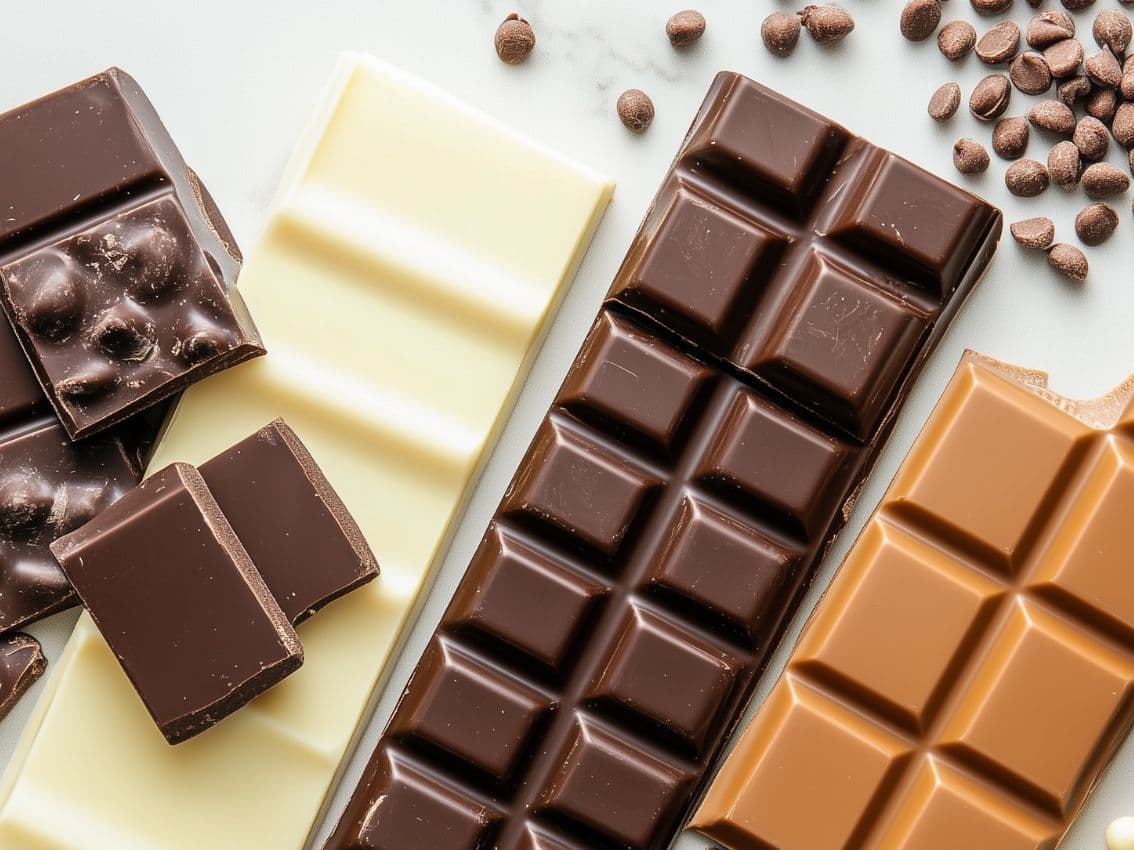
If you've been following The Chocolate School, you've now learned how important cocoa butter, the fat of the cocoa bean, is for chocolate. You also know how to pre-crystallize chocolate in the classic way. Before we learn more ways to pre-crystallize chocolate, it's time to look at chocolate as a finished food product. And what to think about when buying chocolate for making bonbons or other purposes where the chocolate needs to be pre-crystallized.
There is a sea of companies that produce chocolate that can be used for bonbon making. Some examples are Callebaut, Cacao Barry, Carma (these three have in common that they are owned by the same company - Barry Callebaut), Valrhona, Michel Cluizel, Domori, Belcolade... Yes, the list could go on, but you don't need to know them all. You'll come across more as you explore the fantastic world of chocolate.
You might be asking yourself how to know which chocolate to choose, especially if it's your first time trying to make bonbons. I don't want to disappoint you, but the answer will be relatively long – yet it contains something I think you'll find interesting:
Viscosity - An Important Property When Choosing Chocolate
What's most important when it comes to chocolate isn't something objective, but there are a few things to consider like how it tastes. But as a beginner, viscosity is very important. Viscosity might be a new word for you. When we talk about viscosity, we're talking about how thick or runny the chocolate is. Low viscosity means the material is very easy to work with. For example, melted cocoa butter has very low viscosity. If we look at something like glucose syrup, it has high viscosity. What's low or high is, of course, very relative.
If you didn't already know the word viscosity, now you know what it's about. But what does it have to do with chocolate? Depending on how the chocolate is made and what it contains, the chocolate will have different viscosity. When you're used to working with chocolate, it's usually fine to make bonbons with chocolate that has high viscosity. But if you're a beginner, it can cause problems.
Why Low Viscosity Matters for Beginners
A common issue is that the shell - the part of the bonbon that you cast in a mold and later fill with something - ends up way too thick.
That's why it's important that you, as a beginner, make sure the chocolate you're working with has low viscosity. As you become more experienced, with refined technique and the speed you work at, viscosity will, in most cases, no longer be a problem.
Finding Chocolate with the Right Viscosity
It can obviously be hard to know exactly which chocolate to start with. Barry Callebaut, which owns the previously mentioned brands Cacao Barry, Callebaut, and Carma, has a good solution for this. Their chocolate is marked with drops to show the chocolate's viscosity. The more drops, the lower the viscosity. Cacao Barry and Callebaut have 1-5 drops, and Carma has 1-3.
As a beginner, my recommendation is to use chocolate with at least 4 drops. If you can't find any chocolate you want with 4 drops, you can buy one with 3 and add pure cocoa butter when you melt the chocolate, which will give you lower viscosity. About 5% of the chocolate's weight is a suitable amount. If you're melting 600 grams of chocolate, you add 30 grams of cocoa butter.
What Is Viscosity?
Viscosity is a measure of how resistant a liquid is to flowing - how thick or thin it is, and how easily it moves.
Not all manufacturers use this kind of system. My personal experience is that, for example, all chocolate (at least every type I've tried) from Valrhona has relatively low viscosity, and I've never had any trouble working with their chocolate. This also applies to chocolate from Malmö Chokladfabrik.
A little warning - if we should call it that: Chocolate from small-scale producers sometimes doesn't contain any lecithin. If the chocolate lacks lecithin, it can have high viscosity – but that's not always the case. Ask the person selling the chocolate or the manufacturer directly about the viscosity so you know what to expect.
Why Is Lecithin Used in Chocolate?
Lecithin is often extracted from soybeans and sunflower seeds (it's also found in egg yolk – which is why egg yolk can help in an emulsion, a little bonus fact here!). Lecithin is often used in food to help create an emulsion. An emulsion is when two liquids that normally don't want to mix still manage to stay together. A common example is fat and water. Lecithin is what's called an emulsifier. Since the 1930s, it has been used in chocolate. But chocolate doesn't contain any water, so why is it used in chocolate?
Chocolate almost always contains sucrose (the most common type of sugar we have from, for example, sugar beets and sugarcane). The lecithin helps the sugar and cocoa butter integrate with each other, which gives us what we want: the chocolate gets lower viscosity. In this case, it's not used as an emulsifier. As you know, chocolate doesn't contain water.
What Does Chocolate Contain?
Since we started talking about chocolate's ingredients in the discussion about lecithin, I thought we'd continue looking at what chocolate usually contains – and what chocolate shouldn't contain.
Dark Chocolate
- Cocoa mass/Cocoa beans
- Cocoa butter
- Sugar
- Lecithin
- Vanilla
If dark chocolate contains any fat other than cocoa butter, you should be alert. Sometimes it can contain milk fats, which means it's not really dark chocolate – but you'll still be able to pre-crystallize it. If it contains other fats, like palm oil or shea butter, it isn't classified as dark chocolate. You should avoid this type of chocolate completely!
Milk Chocolate
- Cocoa mass/Cocoa beans
- Cocoa butter
- Sugar
- Lecithin
- Vanilla
- Milk powder
- Possibly milk fat
As the name suggests, milk chocolate obviously contains milk. It can be either skimmed milk powder or whole milk powder, or both. The fat from the milk powder makes the chocolate a little softer since it affects the cocoa butter. Sometimes it can contain fats like butter. This is mainly in chocolate from "candy manufacturers". Just like with dark chocolate, milk chocolate shouldn't contain fats like palm oil or shea butter. I'll repeat myself here: avoid it completely!
White Chocolate
- Cocoa butter
- Milk powder
- Sugar
- Lecithin
- Vanilla
- Possibly milk fat
White chocolate was developed by Nestlé in the 1930s and contains no cocoa mass. The only thing from the cocoa bean in white chocolate is cocoa butter. You could argue that it's not chocolate at all – and I'd be inclined to agree. But that's a discussion we can have another time!
Just like with dark chocolate and milk chocolate, white chocolate absolutely shouldn't contain fats like palm oil or shea butter. What do you do if you see that? Exactly - avoid it!
There is also white chocolate that contains caramelized milk powder. These generally contain the same types of ingredients as white chocolate, and manufacturers offering this type of chocolate call them different things, often with a brand name. Valrhona calls their version "Dulcey," while Cacao Barry calls theirs Zephyr Caramel - where Caramel is added as a suffix to the name of their regular white chocolate, which is simply called Zephyr.
The takeaway from this lesson is simply: don't buy chocolate that contains fats other than cocoa butter and milk fats (if the type of chocolate is supposed to contain that). I can't tell you how it will behave when you try to pre-crystallize it.
You Don't Need to Buy Professional Chocolate
Finally, I want to mention that you don't need to buy chocolate from the manufacturers I've mentioned. Those brands often have to be bought from specialty stores. You can actually buy chocolate from your regular grocery store. The important thing to look at is the chocolate's ingredients. Absolutely don't forget that.
Avoid Non-Temp Chocolate for Bonbons
Okay, one more thing to mention: there is chocolate called "non-temp." You should never, ever use this chocolate for bonbon making. This chocolate solidifies without pre-crystallization. It is also not classified as real chocolate. This chocolate was, of course, created because there is a need for it - but that need is not bonbon making.